Moles are common skin growths that most people develop at some stage in their lives. While many moles are harmless, they can sometimes become a concern because of changes in appearance, irritation, catching on clothing or simply because they affect confidence.
At Umi Clinic, we provide professional mole assessment and removal in a safe, clinical environment. Every mole is carefully assessed before treatment to ensure the most appropriate approach is recommended.
Our priority is not only removal, but ensuring you receive the right advice and care for your individual skin concern.
Meet Your Surgeon
Choosing an experienced clinician for skin lesion removal is an important part of your care. At Umi Clinic, your consultation will include a careful assessment of your mole, discussion of your concerns and advice on the most appropriate treatment option.
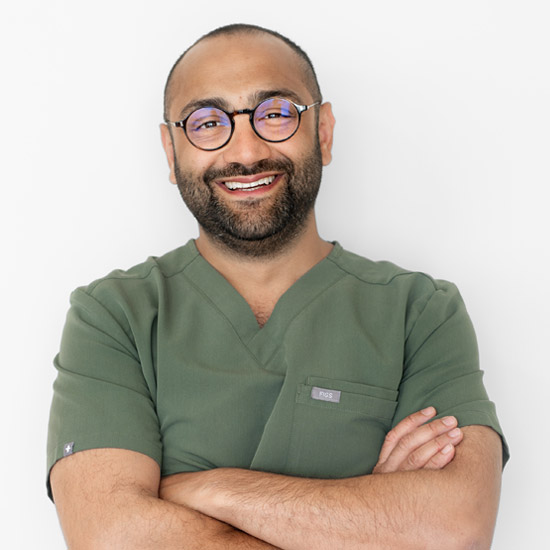
Mr. Samim Ghorbanian
Mr Samim Ghorbanian provides expert surgical assessment and treatment planning, with a focus on safe procedures, careful technique and patient-centred care.
Meet Mr. Samim GhorbanianWhen Should a Mole Be Assessed?
Most moles are harmless, but it is important to seek professional advice if you notice changes.
You should consider an assessment if a mole:
- Changes in size, shape or colour
- Becomes raised or develops an irregular appearance
- Starts bleeding, crusting or itching
- Becomes painful or irritated
- Looks noticeably different from your other moles
- Causes concern or uncertainty
A professional assessment can provide reassurance and help determine the appropriate next step.
Why Remove a Mole?
Patients choose to have moles removed for different reasons, including:
Cosmetic Concerns
Some moles may affect confidence, especially if they are located on visible areas such as:
- Face
- Neck
- Décolletage
- Hands
Physical Irritation
Raised moles may catch on:
- Clothing
- Jewellery
- Razors
- Glasses or accessories
Removal can help prevent repeated irritation.
Diagnostic Reasons
In some cases, removal may be recommended if a mole requires further assessment or investigation.
Your clinician will discuss whether removal and laboratory examination (histology) is appropriate.
Mole Removal at Umi Clinic
The most suitable removal technique depends on:
- The type of mole
- Its size and location
- Whether histology is recommended
- Your desired outcome
Possible techniques may include:
Surgical Excision
The mole is removed using a precise surgical technique, and the area is carefully closed to support healing.
Shave Removal
For suitable raised benign lesions, a shave technique may be used to remove the visible portion of the mole.
Your clinician will explain which approach is most appropriate during your consultation.
Histology (Laboratory Examination)
In some cases, the removed tissue may be sent for histological examination.
Histology allows the sample to be examined under a microscope and provides confirmation of the diagnosis.
If histology is recommended, this will be discussed with you before treatment.
Your Consultation at Umi Clinic
Your consultation is the first step towards understanding your skin concern.
During your appointment, we will:
- Discuss your reasons for wanting removal
- Examine the mole carefully
- Assess whether removal is appropriate
- Explain available treatment options
- Discuss possible scarring and aftercare
- Answer any questions you may have
We believe every patient should have clear information before deciding on treatment.
BOOK YOUR MOLE ASSESSMENTRecovery After Mole Removal
Recovery depends on the size and location of the mole and the removal technique used.
You may experience:
- Mild tenderness following treatment
- Temporary redness around the area
- A healing period while the skin repairs
- A scar that gradually matures over time
Your clinician will provide personalised aftercare advice to support healing and optimise your result.
Mole Removal FAQs
Not every mole requires removal. Assessment is important to determine whether removal is appropriate and which technique is best.
Any procedure that removes skin may leave a scar. The appearance depends on the size and location of the mole, the removal technique and how your skin heals.
Procedures are usually performed under local anaesthetic, which helps minimise discomfort during treatment.
Yes, some patients choose removal because a mole affects their confidence or appearance. Suitability will be assessed during consultation.
Recovery varies depending on the procedure. Your clinician will provide guidance based on your individual treatment.